The problem with trying to interview an adventure photographer is that they’re often on adventures.
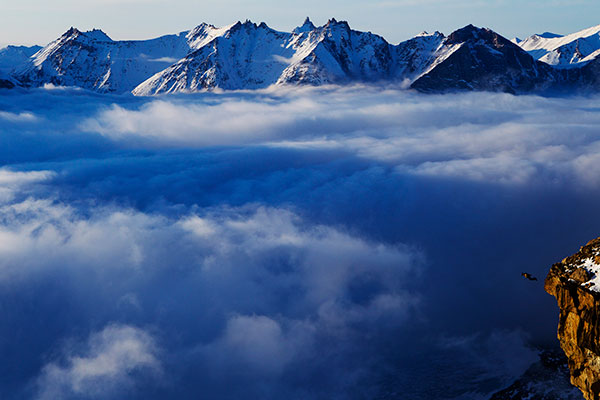
BASE jump, Baffin Island, by Krystle Wright. “This was during my first major expedition. I spent a month camped on a frozen fjord with 23 BASE jumpers. After setting up base camp in a raging blizzard, the weather cleared the following day and everyone was excited to get in their first jump. I hiked up with the first group as we needed to split into three groups to reduce the numbers on the exit point. The first two groups jumped and I was on their right, shooting into the sun. As the third group arrived, I decided that I needed to find another angle, so I took a chance and went to the other side of the jump. I found myself a rock to perch on where I waited what seemed like forever. I was freezing cold as a blizzard began to roll into the fjord. As the final group jumped it wasn’t until the very last jumper that I found the right composition. Luckily all the elements came together for that shot. I don’t think I ever got another shot during that expedition that matched this one. Then of course I had the joy of hiking back down in the blizzard where I could barely see a few metres in front of me.”
[Article by Don Norris, first published in Photo Review Issue 58]
When I first tried to contact Krystle Wright, it did not come as complete surprise to discover that she was out at sea, somewhere in the Mediterranean. She was halfway through a long assignment – and reaching her would not be easy.
Luck – of a sort – intervened when an unanticipated development of a dental nature required Krystle to put into port for a day or two. We were able to exchange emails but a phone call wasn’t really practical. So I sent off a list of questions in the hope Krystle might have time to respond before this issue’s deadline. Happily fortune smiled on us; she was able to find another Internet connection and the following responses arrived just in time.
How did you first get interested in photography?
I was 16 and I remember being really excited when I discovered the Kodak disposable panoramic camera. I really wanted to create interesting images with it. On one trip to Bald Rock National Park as I was completing the Duke of Edinburgh course with my high school, I remember looking for interesting perspectives and compositions. It was a fun challenge. With your roll of 27 images you had to choose so carefully what you wanted to take a picture of. I remember strategising how many pictures I would let myself take each day so I could make the camera last the trip.
When did you buy your first ‘serious’ camera and what was it?
My first serious camera was the Canon Mark II N and the 24-70mm f/2.8.
During my first year in a Bachelor of Photography at QCA in Brisbane, I didn’t really know what I was doing with photography. After completing some work experience with The Sunshine Coast Daily and The Courier Mail, I knew I was on the right path. I asked around among all the photographers to find out what cameras they preferred. Everyone I asked told me how great Canon was, especially for sport photography. I took the plunge and really stepped up by getting the Mark II N. Initially my dream was to work in the newspaper industry and run the sidelines at the major sporting events.
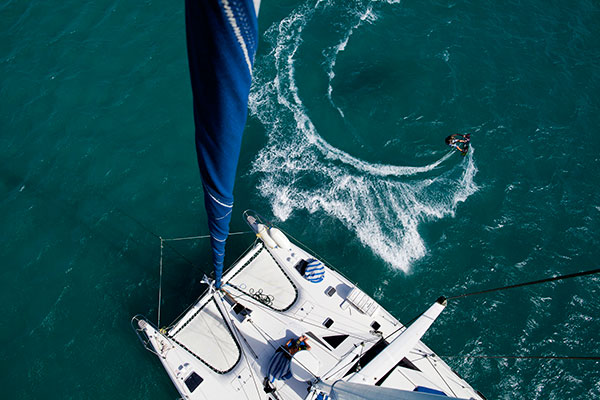
Brett Wright carves the water off the coast of Eagle Island whilst kite surfing on the Great Barrier Reef in far north Queensland.
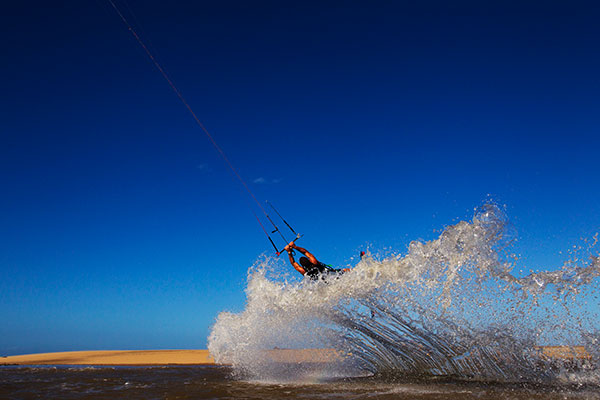
Austrailian kite surfer Daniel Anderson leaps into the air off the coast of far north Queensland, Australia.
How did you get into adventure photography?
I have always been intrigued by the adventure realm as I love being outdoors. During my last year at university, I had the opportunity to create a folio for my final assignment. Initially I shot surfing as I had relatively easy access to shoot it when I was living on the Sunshine Coast. Gradually I began to extend into other sports. One day I walked into a rock climbing store and enrolled in an abseiling course. Once I began to develop the right skills, I became more and more intrigued to pursue adventure photography.
After university I immediately moved to Sydney and started working as a casual photographer for The Sunday Telegraph and as a stringer for AFP. Tim Clayton, my mentor at the time, stressed that while I should find work that could pay the bills, I should also pursue personal projects in my spare time.
During my free time, I would constantly look for ways to shoot adventure sports – whether it be mountain biking, rock climbing, surfing and so forth.
After three years with The Sunday Telegraph, I realised that I wasn’t passionate about the newspaper industry any more.
In mid-2011, I returned from a five-week trip to Pakistan documenting Red Bull paragliders, having been heavily injured in an accident that forced me to stop work for a while. It was strange, yet perfect timing. I ended my time with the newspaper and once I was healed, I took the major plunge into becoming an adventure photographer full time. Thankfully I already had numerous contacts established in the adventure industry to make it work.
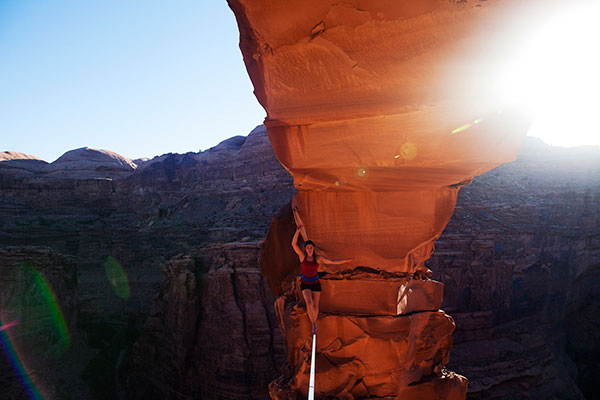
Emily Sukiennik, Hunter Gatherer Canyon, Moab Desert, Utah.
Do you visualise photographic ideas and then put things in place to create them, or do you mainly respond to the circumstances of the day?
Ninety percent of the time, I respond to the circumstance of the day. With adventure, no matter how much you plan, it all goes out the window as soon as you arrive at the location. So I prefer to react to the situation at hand. Again, coming in with a solid understanding of the sport, you can usually read the situation well and figure out on the spot how to get the right photograph.
There has been one particular idea within BASE (Bridges, Antennas, Skyscrapers and Earth) jumping that I’ve been dreaming of for three years now. It’s an idea that will take the perfect location, incredible light and a precise angle to nail the shot. I’ve had a few misses so far but I am still determined to nail this dream shot. With the bigger scale projects, I do believe it is important to map out some ideas on paper, but still to arrive at the location with an open mind. I was taught to always be prepared for the unexpected.
What other areas of photography do you enjoy working in?
I absolutely love photographing wildlife! I don’t often get the chance to focus on it but hopefully there is an opportunity one day to dedicate a few months to a wildlife project. Also I enjoy the challenge of portraiture. Sometimes I miss running the sidelines at the major sporting events as it is a great challenge to capture a shot that stands out from the other photographers but really, these days I prefer my ever changing ‘office’ in the adventure realm.
Apart from nerves of steel, superb fitness and complete command of your gear, what other essentials are there for your line of work?
Particularly as a freelancer, you need to be proactive and have a good grounding in business skills. To survive, it becomes a balance of 50% shooting and 50% business. Ideally I wish I were shooting all the time. But reality sets in and you need to be running a business and keeping your bookwork in line – whether it be managing magazines or clients, or making sure your photo library is up to scratch. Then there is the networking! It never stops as a freelancer as it’s important to be reaching out to new clients whenever possible. One of the first lessons I learnt as a photographer was how to connect with other photographers, editors, agents and so forth.
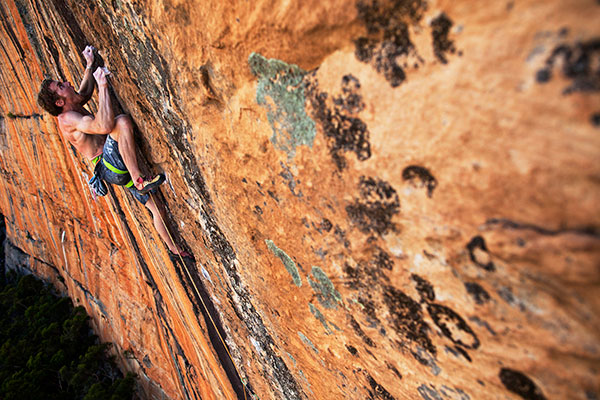
One of Australia’s best climbers Ben Cossey, sends Groove Train 33/8c+ on Taipan Wall in the Grampians, Australia.
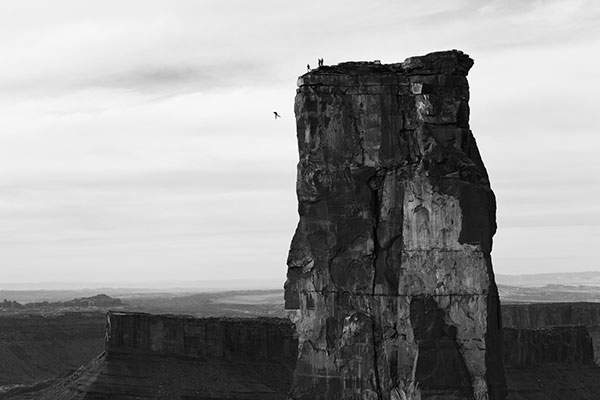
When you only have one chance to get right, how do you give yourself the best chance of coming back with a result?
Having a sound understanding of the sport will always help – though it can be a little nerve-wracking when you only have that one chance to get the shot. I try to forget about the pressure and relax, knowing I am in my element and enjoying what I do. Then it becomes easier to manage the situation. If it’s a situation where there’s only the one shot, then I tend to have a pre-conceived idea in my head. That way I don’t become nervous if I arrive and have a blank moment.
There have been a few situations where a lot of elements have come into play, including hiring a helicopter to get the right angle, but the shoot hasn’t gone the way I hoped. Sometimes you need to take that extra risk if you want to give yourself the opportunity of bringing back a photo that really stands out.
Has the adventure photography field changed much since you came into it?
In the past few years some magazines have shut down and printed publications have generally become fewer. However, there has been a huge growth in digital content and video demand. It has been a gradual change in the adventure industry rather than a sudden change happening overnight. I am still young in the industry and it’s important for me to remain optimistic. If I were to become pessimistic now, then how on earth am I going to survive a career in this industry? I’ve been open-minded and recently started filming on my adventure projects. However, I still love the power of a still image. The feeling of nailing that incredible moment, well it’s hard to beat.
What hasn’t changed is the need to push the limits in creativity and skill to bring back shots that stand out above the rest. Adventure photography is different from many professions because you need an entire set of relevant skills to successfully document the sport you are shooting. And that in turn usually means you too have the passion of an active participant in the sport you’re photographing.
Excerpt from Photo Review Issue 58
Subscribe to Photo Review magazine